Where have the real men gone?
Why it feels like masculinity is disappearing, when it's really just transforming.
"Where have the real men gone?" usually comes up when someone is tired. Tired of dating, tired of disappointments, tired of uncertainty, tired of feeling like they don't understand the other person anymore.
In moments like that, it's incredibly tempting - both for women and men - to look for a culprit. Women blame men for getting soft. Men blame women, equality, the modern world, social media, and feminist discourse. Parts of both sides can sound convincing, but the truth is simpler: the old scripts have fallen apart, and the new ones still aren't clear enough.
In this article, I'm not going to say back then it was better, or that everyone is toxic. I'm trying to understand why this topic has become so exhausting for both genders. The change in gender roles hasn't felt like liberation for many people - it has felt like confusion. And confusion rarely looks good on anyone.
What does a "real man" actually mean?
We use the phrase "real man" as if it were a permanent, carved-in-stone definition. As if there were a secret checklist, and if you tick the boxes, you earn the stamp: MAN. But real usually doesn't point to an objective truth - it points to desire and fear at the same time.
A desire for someone to be stable, reliable, present. And a fear that if men aren't like they used to be, then what do we hold onto? The problem begins when we confuse a real man with dominance, emotional numbness, and control. Because then we're not looking for a man - we're looking for armor.
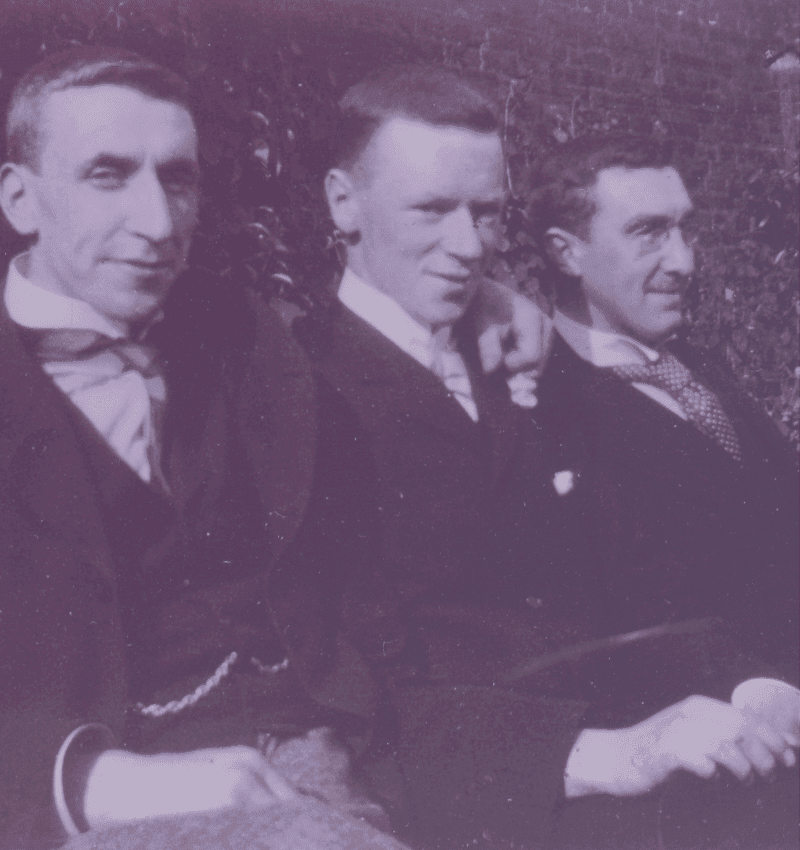
The old model: work, provide, don't ask questions - but is that really the goal?
The masculinity crisis: not weakness, but a transition
A lot of people talk about a masculinity crisis, and there's something to it. Not because men have become worse or better, but because they've become different - and that's hard for both sides to adjust to.
For many men, this transition creates an internal collision. The old pattern says: solve it alone. The new model expects: talk about it. If someone was never taught how to balance those two, the classic reactions show up: cynicism, withdrawal, overcompensation, or a hard attack that is, in reality, self-defense.
There are fewer stay-at-home women, most women work, and many earn more than some men. That's not the end of masculinity - it's the doubling of performance pressure for both sides. Those who don't understand this will keep blaming each other.
Toxic masculinity: when the "manly" label becomes an excuse
Many people hear the phrase toxic masculinity as if it means masculinity is toxic. But it's really about the moment the male role is squeezed into such a narrow pipe that it harms everyone - the man, his partner, his child, his friends.
It's toxic when masculinity gets confused with entitlement. A lot of men try to live by modern patterns, yet still treat their gender like an idol. In those cases, the decisiveness a woman is actually looking for becomes control, calm turns into emotional freezing, and leadership turns into domination. It's no less toxic when vulnerability becomes a forbidden zone because "that's not manly."
Masculinity doesn't become bad because of this. It simply becomes visible which parts are real strength and which parts are a pose built out of panic.
The change in gender roles - the truth behind the question
The change in gender roles doesn't mean men need to become women by dropping every masculine trait, or women need to become men by adopting them. It means responsibilities and rights are less automatic. Authority isn't granted by gender - it's earned through behavior. In a relationship, it's no longer assumed that one person serves while the other receives. Those things become agreements. And that's more uncomfortable, because you have to talk, negotiate, and compromise, not just walk into a ready-made script.
A lot of conflict isn't actually about the idea that women's equality kills masculinity, but about men's panic response. About the feeling that some men have lost a safe, guaranteed role while no one taught them how to build a new one. Meanwhile, some women feel they no longer have to swallow everything in silence - but they also don't want to be seen as the villain who emasculates their partner just for having legitimate needs.
From this perspective, masculinity isn't dying - an old, automatic hierarchy is. And that's hard to accept, even if you agree with it and want to follow the new pattern.
Healthy masculinity: not soft, not hard, but stable

Healthy masculinity isn't about being loud - it's about being present
Healthy masculinity isn't healthy because it's quiet or loud, dominant or accommodating, rich or broke. It's healthy because it's stable.
A lot of people ask the question the wrong way. We don't need real, we need functional. Not old-school or modern, but reliable. Not a dominant man, but a man who doesn't fall apart just because a woman has a voice, expectations, and income.
We want politeness, but if someone checks in too often, it's too much. We want dominance, but not like that. We want an old-school man, but also a modern one. In reality, nothing is clearly expected - everyone is just confused. And that's true in both directions.
Does women's equality kill masculinity?
No. At most, it kills what used to disguise itself as masculinity: automatic privilege, unquestioned authority, the logic of I'm entitled to this. That can hurt someone who grew up with it and built part of their identity on it. And it doesn't hurt a little. That's why the key is compromise and growing together.
Real masculinity - integrity, responsibility, calmness, self-control, care, courage - doesn't collapse because a woman isn't subordinate. If anything, equality tests exactly this: do you have real inner strength, or just role muscles, a mask? The moment you can handle a strong woman without controlling her or shrinking her, it becomes clear whether you're truly strong - or whether you were just camouflaging weakness.
And if someone feels that today you can't be a man, often the problem isn't that you can't - it's that it's unclear what kind of man is worth being. That's not ideology anymore; it's a learnable skill set: communication, self-awareness, boundaries, responsibility, presence. Men can learn it, and women can be more patient, if both sides have willingness for compromise and understanding.
The most honest answer to "Where have the real men gone?" might be this: they're here. It's just that being real doesn't mean the same thing it used to. And that isn't masculinity dying - it's masculinity getting updated.
Write in the comments: what does a real man mean to you? What are 1-2 things that make you feel, "yes, this is stable"?